

This article was published in Waterproof 2026 – 1.
UPPWATER programme enables full-scale testing
Those working in the water sector have long known the scale of the problem: the vast quantities of pharmaceutical residues that end up in waterways each year represent a serious global challenge. In the Netherlands alone, an estimated 190 tonnes of medicinal residues enter the water system annually. Wastewater treatment plants were never originally designed to remove these substances and currently eliminate only part of them.
Fortunately, the urgency of the issue is now increasingly recognised. Within the UPPWATER-project ‘Membrane filtration for the removal of micropollutants from wastewater’, Waterschap Vechtstromen is working with a consortium of partners to develop solutions. It is a complex and ambitious undertaking aimed at delivering cleaner water. Rob Sjerps (Waterschap Vechtstromen) and Eddie Broeders (Nijhuis Saur Industries), both closely involved in the project, offer an update from the front line.
Advances in medicine mean people are living longer than ever before, and treatments are available for serious illness, pain, depression and many other conditions. Yet this progress has an environmental downside. Painkillers, antibiotics, antidepressants and hormones leave the human body through urine and faeces, eventually reaching rivers and streams via the sewer system.
For humans, the concentrations detected in drinking water currently pose no direct health risk. For aquatic life, however, even extremely low doses can have significant effects. Hormone-like substances, for example, can disrupt the reproductive systems of fish, while antibiotics contribute to the spread of antibiotic resistance in the environment. Ultimately, entire ecosystems – of which humans are also a part – may come under pressure.
Four variants
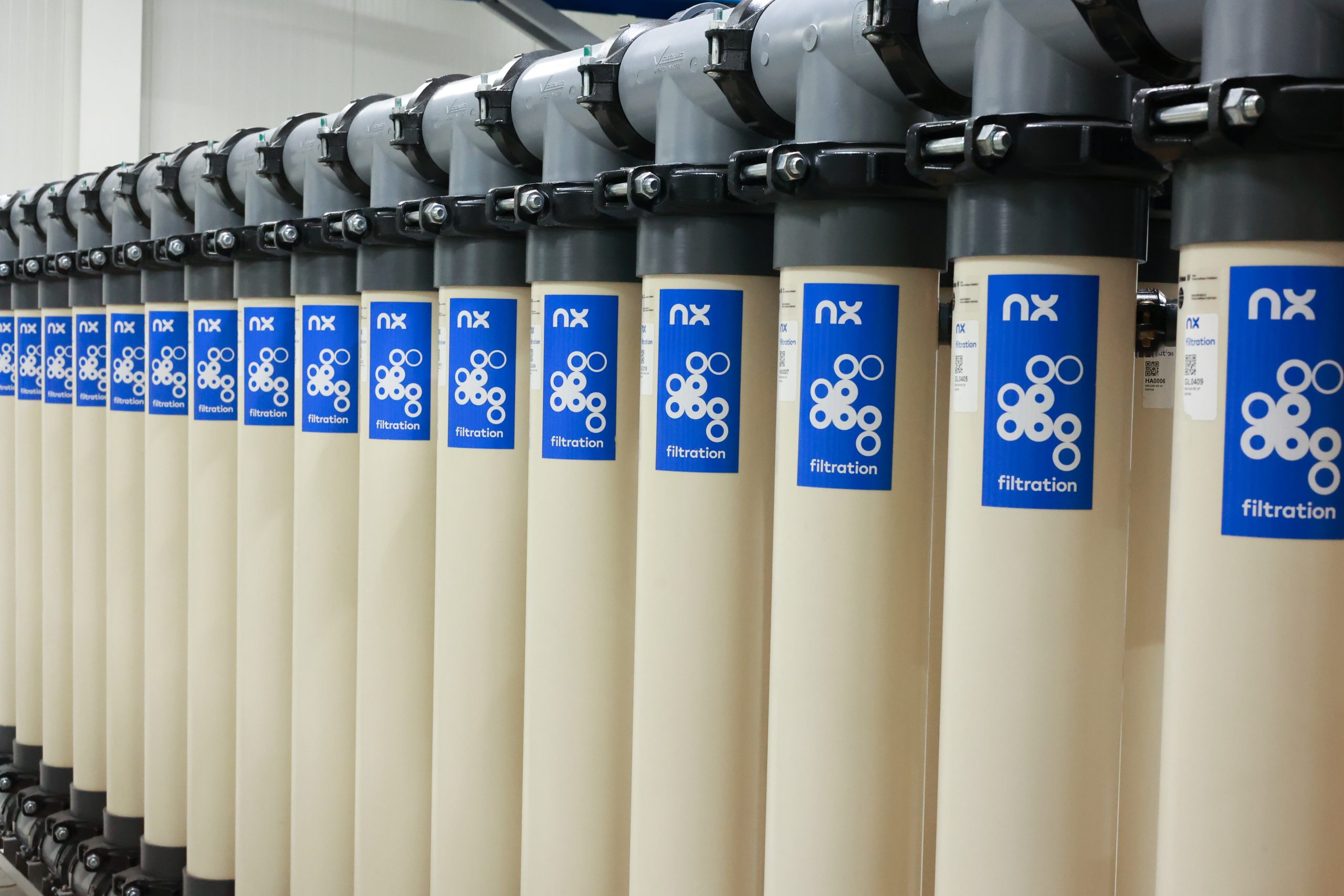
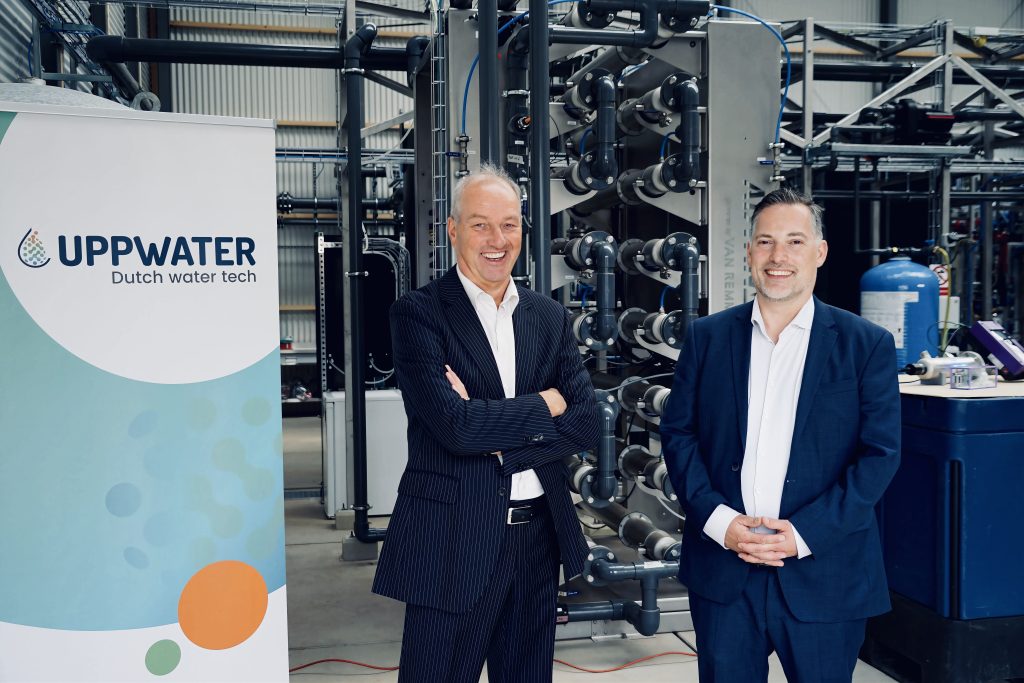
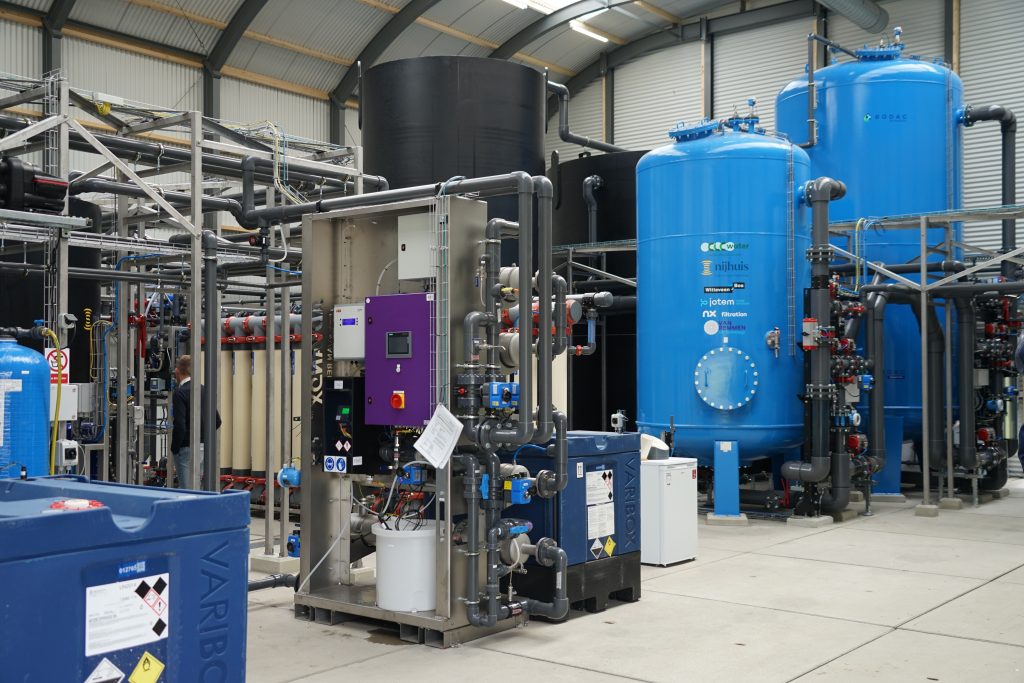
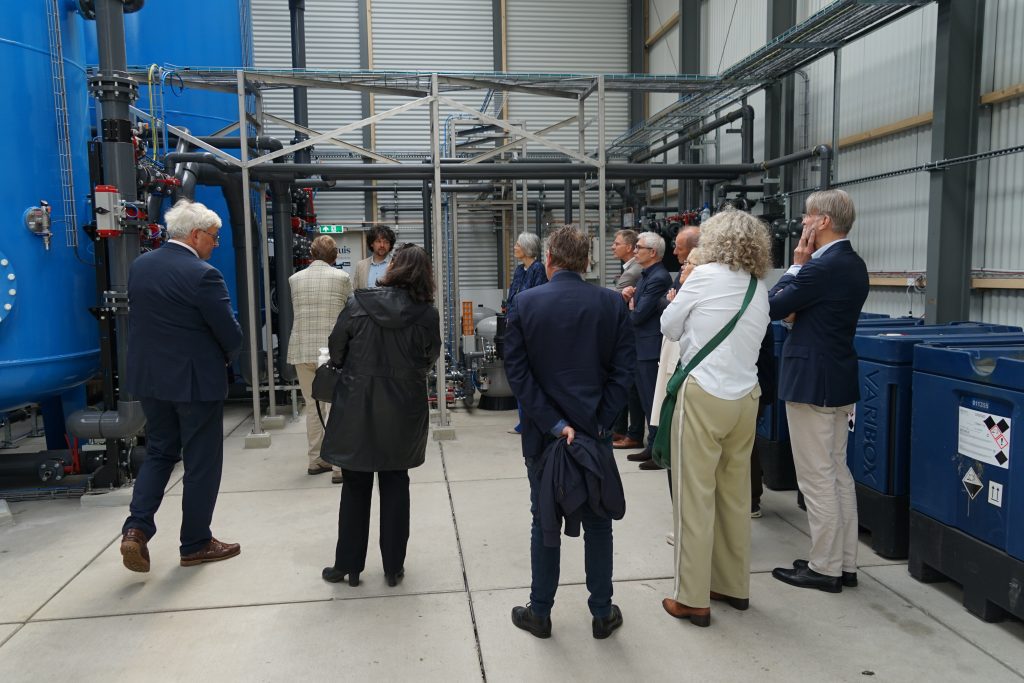
As part of the UPPWATER-project, Nijhuis Saur Industries and Witteveen+Bos (on behalf of the CLC Water partnership), together with Jotem Water Solutions, NX Filtration and Van Remmen UV Technology, are working on potential solutions. The work is taking place at the wastewater treatment plant operated by Waterschap Vechtstromen in Enschede.
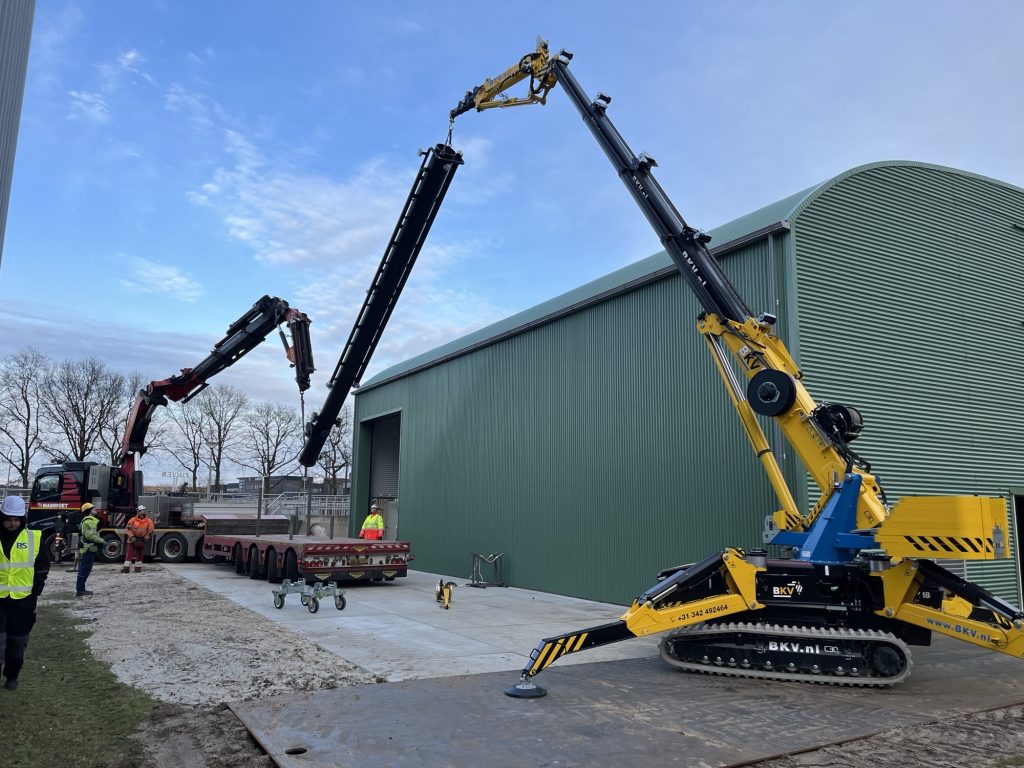
“Over the past year we have built a special installation where we can test four different variants over a period of eighteen months, across a wide range of variables,” says Rob Sjerps, project manager at the water authority. “The testing began this spring.”
The four pilot configurations that have been constructed, combine variations of UV/ozone treatment, nano- and ultrafiltration membranes, and different pre-treatment techniques.“The technologies tested in the demo must achieve a purification efficiency of at least 80%,” says Sjerps. “That is the standard that will be required in the future under the European Urban Wastewater Directive. Some of the technologies being tested are already reaching removal rates of up to 95%. But we need to assess carefully whether that level is actually necessary.”
Each variant is assessed not only for its ability to remove pharmaceutical residues, but also for seasonal and weather influences, energy consumption, chemical use and overall costs. “Ultimately we are looking for the optimum,” says Sjerps. “A solution where the combination of all these factors delivers the best overall outcome. The most promising variant will then be built and tested at full scale.”
The location in Enschede was chosen deliberately. According to long-term monitoring by the Dutch water research foundation STOWA, the city in the Twente region is a clear hotspot for pharmaceutical residues.
“In the hotspot analysis, Enschede shows up bright red,” says Sjerps. “We are dealing with high concentrations of pharmaceutical residues in the wastewater because of the large urban inflow, with many healthcare facilities and a major university hospital.”
Hotspot
The location in Enschede was chosen deliberately. According to long-term monitoring by the Dutch water research foundation STOWA, the city in the Twente region is a clear hotspot for pharmaceutical residues.
“In the hotspot analysis, Enschede shows up bright red,” says Sjerps. “We are dealing with high concentrations of pharmaceutical residues in the wastewater because of the large urban inflow, with many healthcare facilities and a major university hospital.”
Full scale
The research is being conducted thoroughly, with the ultimate aim of delivering solutions that can be applied by wastewater treatment plants worldwide.
“It’s not only about the technology,” says Sjerps. “We also want to learn about cost development, operational management, public acceptance and scaling up. Our unique process approach focuses on efficient product development, continuously testing the design of the demo installation against the consequences for a full-scale system.”
He adds that the concentrated residual stream also presents a challenge the project will have to address. “That residual stream is a sludge-like substance which is, of course, contaminated. You have to deal with it somehow,” says Sjerps. “Sending it back into the treatment process is not an option – that would simply concentrate the problem further. So we will have to find a solution within the project.”
After the demonstration phase, a full-scale installation – planned for completion by the end of 2028 – is expected to be built with a treatment capacity of 500 cubic metres per hour. That step will be crucial in achieving Vechtstromen’s strategic goals in water quality, innovation and sustainability.
A complex collaboration
One of the distinctive aspects of the project is the way the collaboration with Nijhuis Saur Industries came about. Through a European procurement procedure, market parties were invited to contribute ideas before the tender specification was finalised.
“Together we were able to develop the concept that best suited the challenge,” says Sjerps.
“A successful trajectory requires not only technical expertise, but above all effective collaboration,” agrees Eddie Broeders of Nijhuis Saur Industries. “Thanks to the long-term contract structure and the enthusiastic and highly skilled team of partners, this led in May to the realisation of a flexible demonstration installation that can serve as a reference and deliver valuable results. The knowledge gained can then be applied nationally and internationally.” Meanwhile, those involved say they are also enjoying the process. “This is genuinely inspiring to be part of,” says Sjerps. “It’s a large collaboration with many stakeholders involved. Sometimes we have twenty people around the table – from very bright young engineers to seasoned veterans. Everyone wants this to succeed.”
About CLC Water
The UPPWATER pharmaceutical-residue removal project involves the consortium CLC Water (Combinatie Lokaal Circulair Water). This partnership brings together Nijhuis Saur Industries, Witteveen + Bos, ADS Groep, Moekotte and Pannekoek GWW.
Nijhuis Saur Industries is a member of Water Alliance. The company’s history dates back to 1845, while Nijhuis Industries itself was founded in 1904. Its headquarters are located in Doetinchem, the Netherlands. In 2020 the company became part of the French water group Saur.
Other Water Alliance members involved in the UPPWATER project in Enschede include Jotem Water Solutions, NX Filtration and Van Remmen UV Technology.
UPPWATER and government support
It is quite possible that a blueprint for the wastewater treatment plant of the future is currently taking shape in Enschede – with solutions that may also prove attractive to other countries. That would also benefit the Dutch water technology sector.
The UPPWATER programme will invest more than €340m in projects of this kind up to 2032. Of this, €135m is financed through the Dutch government’s National Growth Fund.
“The government plays a crucial role,” confirms Ronald Wielinga, operational director at Water Alliance, one of the programme’s partners. “Through programmes such as UPPWATER we not only generate more knowledge, but also ensure that Dutch expertise is better mobilised for water and environmental challenges. And with initiatives such as EEN, CircInWater and WTEX10 we connect those solutions with partners both in the Netherlands and abroad.”
Those interested in opportunities for Dutch water technology companies can find more information via:
https://wateralliance.nl/groeiplan-watertechnologie/
UPPWATER and WaterProof
Many more projects have been launched within UPPWATER. New technologies for wastewater treatment plants are indispensable. Already, smart sensors, real-time simulations and software-based decision support are helping operators manage treatment processes more effectively.
Within UPPWATER, the project ‘Smart sensoring and AI for self-steering wastewater treatment’ has been established to explore these developments. Water Alliance member Powerspex – together with the companies Landscape and Columbus – is among those involved.
A future special UPPWATER edition of WaterProof will explore this project in more detail.