

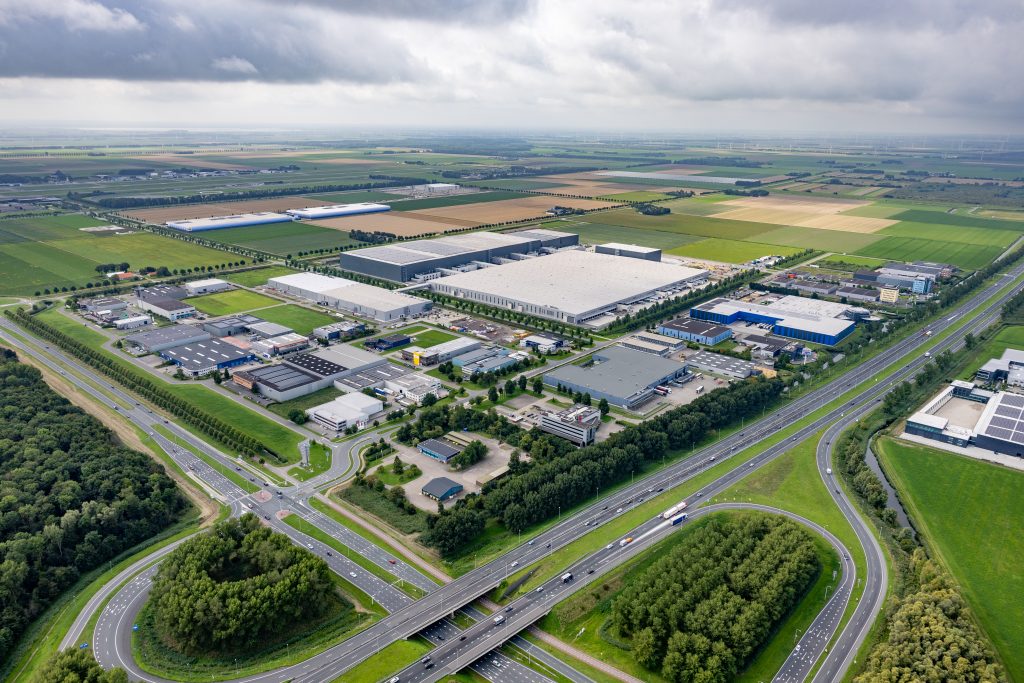
It has been some time since Lelystad Airport Businesspark (LAB) made national headlines with its circular water system, centred on vacuum sewerage and vacuum toilets. The result is that wastewater is treated and reused locally, saving thousands of cubic metres of drinking water each year. It is precisely the kind of project the Circular Water Expert Group of the Water Alliance is keen to get its teeth into — particularly in light of the many challenges the Netherlands faces in the years ahead.
“LAB deserves credit as an area developer for what has now been achieved,” says Joost Kreuger. In his day-to-day work, Kreuger is a projectmanager at Qua-vac and, in that capacity, also a member of the Water Alliance’s Circular Water Expert Group. The group’s mission is to accelerate the application of technologies that enable water to be reused in homes — and in businesses. Increasing the use of rainwater is another objective, all with the broader aim of reducing drinking water consumption and cutting energy use in and around the built environment.
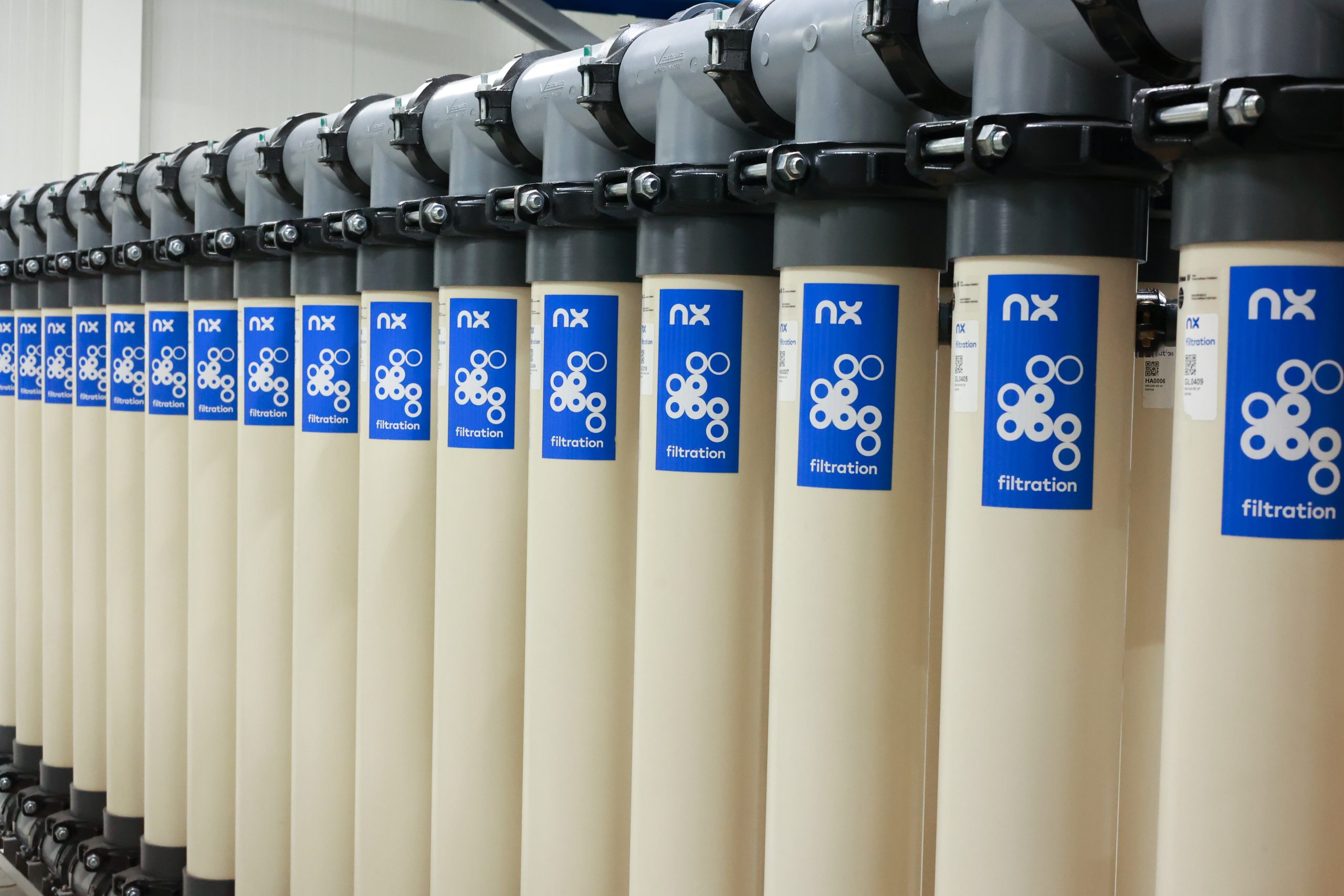
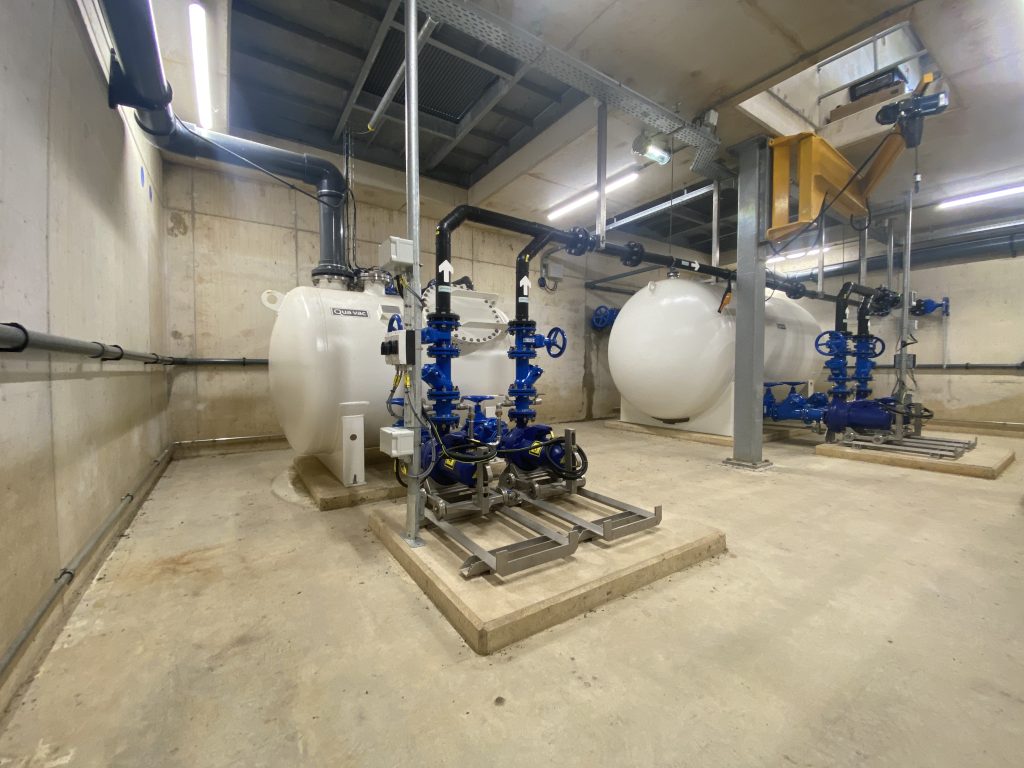
Kreuger recalls the LAB project with evident pride. “In collaboration with, among others, WaterLab Circulair Water, Liander, Vitens and numerous companies, the site has become a genuine best practice in area development and circular water use,” he says. For the technical realisation of the water chain, parties including Jotem, Rietland and Qua-vac joined forces. Rietland provided natural pre-treatment using its Phytoair system; Jotem delivered membrane and oxidation-based purification; and Qua-vac supplied the vacuum systems.
Award for sustainable water use
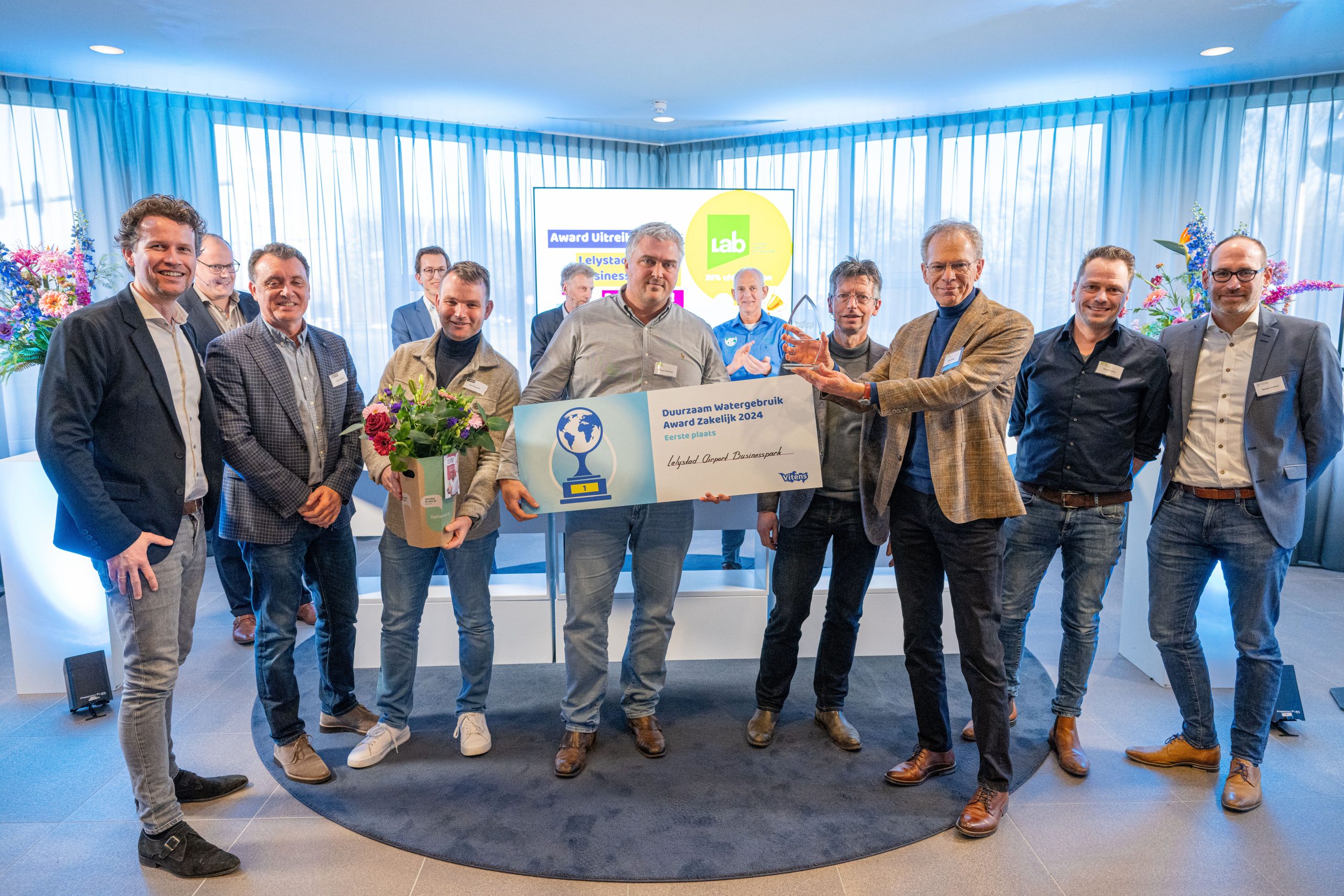
The outcome is the reuse of water for industrial processes and firefighting purposes, delivering significant savings in drinking water and energy, alongside a sharp reduction in discharges. The approach earned LAB the Sustainable Water Use Award from Vitens — a notable endorsement of circular thinking put into practice.
“The project had several objectives,” Kreuger explains. “First and foremost, to maximise the reuse of wastewater, thereby reducing drinking water consumption. But we also wanted this case to demonstrate how a scalable and reproducible area-based approach can be applied to other business parks.”
Economies of scale
Given the scale of the construction challenges the Netherlands faces, Kreuger argues that an integrated approach to circular water is self-evident. “You achieve economies of scale by thinking beyond individual buildings and designing solutions for an entire area. That is what we did at LAB. We also ensured that water across the entire site could be reused.” This was made possible in part by Rietland’s natural pre-treatment technology, which requires less energy and fewer chemicals. Jotem’s nano-filtration and UV/H₂O₂ oxidation processes also played a role, upgrading part of the treated water to a standard suitable for firefighting or industrial use.
Vacuum sewerage
Dennis Meerburg, business developer at LAB, looks back on the project with satisfaction. “We save substantial volumes of drinking water by collecting it efficiently and purifying greywater on site. The remaining toilet water is propelled at high speed through narrow pipes using air pressure and minimal water — rather like the system used on aircraft. Transporting wastewater in this way is more compact and significantly less energy-intensive.”
Photos: royalty-free
Aerial photographs: Pluim Fotografie
WaterLab Circulair Water
With ambitious construction plans looming nationwide, LAB stands as a textbook example of how circular water technology can make sustainability tangible on business parks. It is also a best practice in public–private cooperation, underpinned by targeted subsidy schemes.
Between 2021 and 2023, the province of Flevoland hosted the WaterLab Circulair Water project. Partners included the Province of Flevoland, Waterschap Zuiderzeeland (on behalf of the SAF wastewater partnership), STOWA and the Water Alliance. End users such as LAB were connected, via the Water Alliance, with water technology companies. In 2025, LAB received national recognition by winning the first Sustainable Water Use Award for Business, presented by Vitens.
Within the Water Alliance, more than 200 Dutch water technology companies share knowledge across ten expert groups — a model designed not only for exchange, but for joint project development.
Websites:
https://lelystadairportbusinesspark.nl/
https://quavac.com/nl/
https://rietland.com
https://www.jotem.nl/
https://wateralliance.nl/expertgroepen