


This article is part of ‘Tapping into Italy: Dutch watertech making waves’, a series of short stories featuring several Dutch water technology companies in the Watertech2Italy cluster. Through the Partners for International Business (PIB) programme, and supported by Water Alliance and the Netherlands Consulate in Milan, these companies are working to establish a foothold in the Italian market.
At Ecomondo 2025, Dutch water technology companies showcased their innovations to the Italian market — a market they consider strategically important. In the wake of the event, we spoke with several Dutch companies about their experiences.
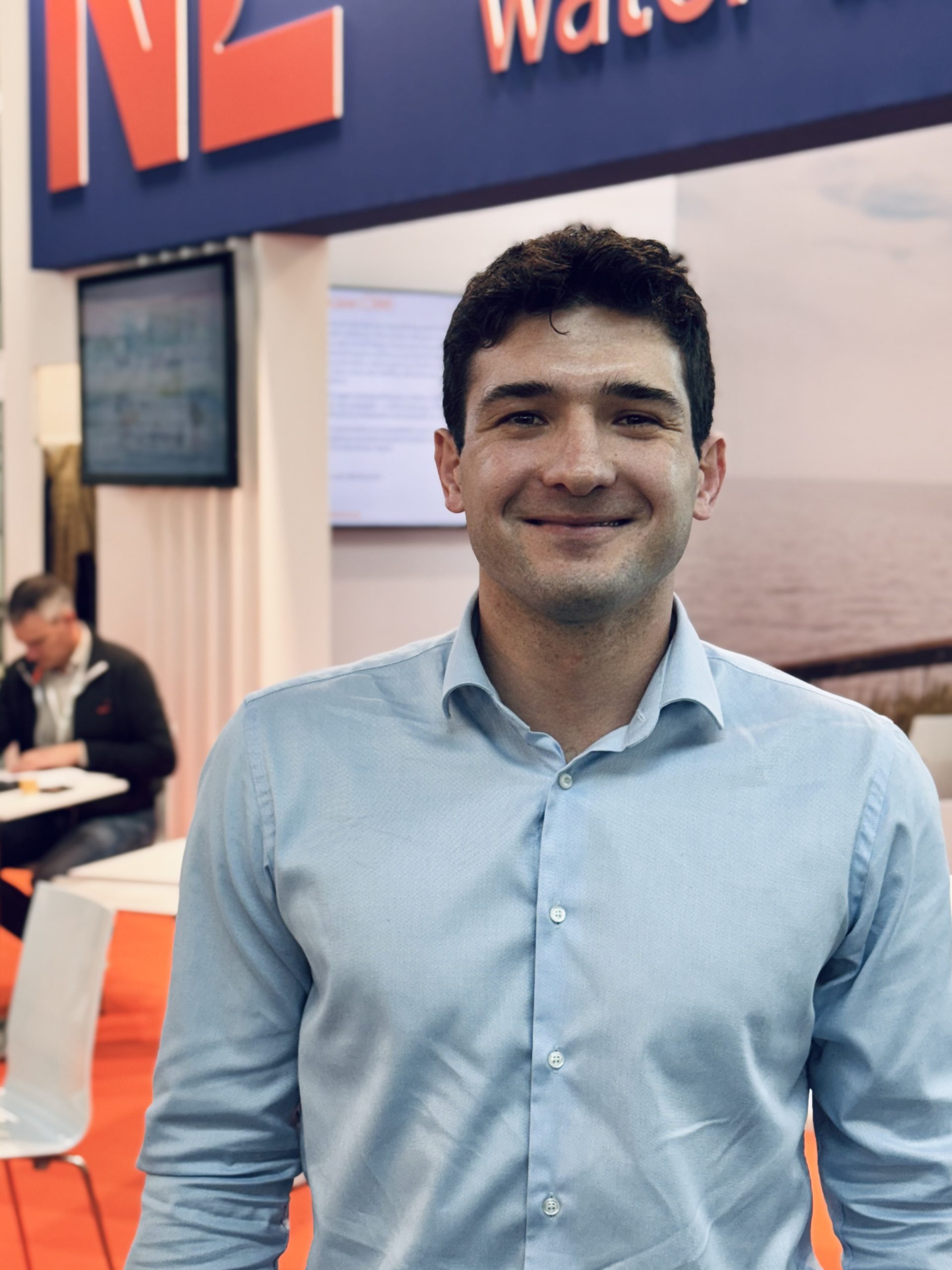
In this story, Edoardo Nencini, Business Representative at Samotics, explains why Italy matters.
“Italy is a key market for Samotics,” he said. “This is due to the strong focus here on industrial efficiency, sustainability and digital transformation within utilities and manufacturing. Water and wastewater companies, chemical producers and infrastructure operators are increasingly embracing predictive maintenance and energy optimisation to reduce downtime, energy waste and CO₂ emissions. People here are also open to collaboration. All of this aligns perfectly with our SAM4 technology, which uses high-frequency electrical data and AI to continuously monitor motor-driven equipment. It allows us to help organisations achieve both reliability and sustainability.”
It was Samotics’ first time at Ecomondo, and Nencini was visibly enthusiastic. “We had really been looking forward to this. The event offered a unique opportunity to connect with companies that share our passion for sustainability, innovation and efficiency. We were keen to discuss with potential customers how AI-driven monitoring can support more reliable and energy-efficient operations across different sectors. Ecomondo was the ideal platform to exchange ideas, explore collaborations and uncover new opportunities to create real value together.”
Samotics has been active in Italy for some time. “We are working with forward-thinking water companies and industrial operators — for example, those running critical installations such as pumps, mixers, conveyors and blowers,” Nencini said. “At a water utility in north-west Italy, we are currently monitoring several pumps and have been able to identify both developing faults and inefficiencies in energy consumption. This allowed the utility to prevent two catastrophic failures in submerged pumps — avoiding the discharge of untreated wastewater and the complete loss of the equipment — and to identify potential savings of up to €50,000 in energy costs.”