

This news item was submitted by Brightwork.
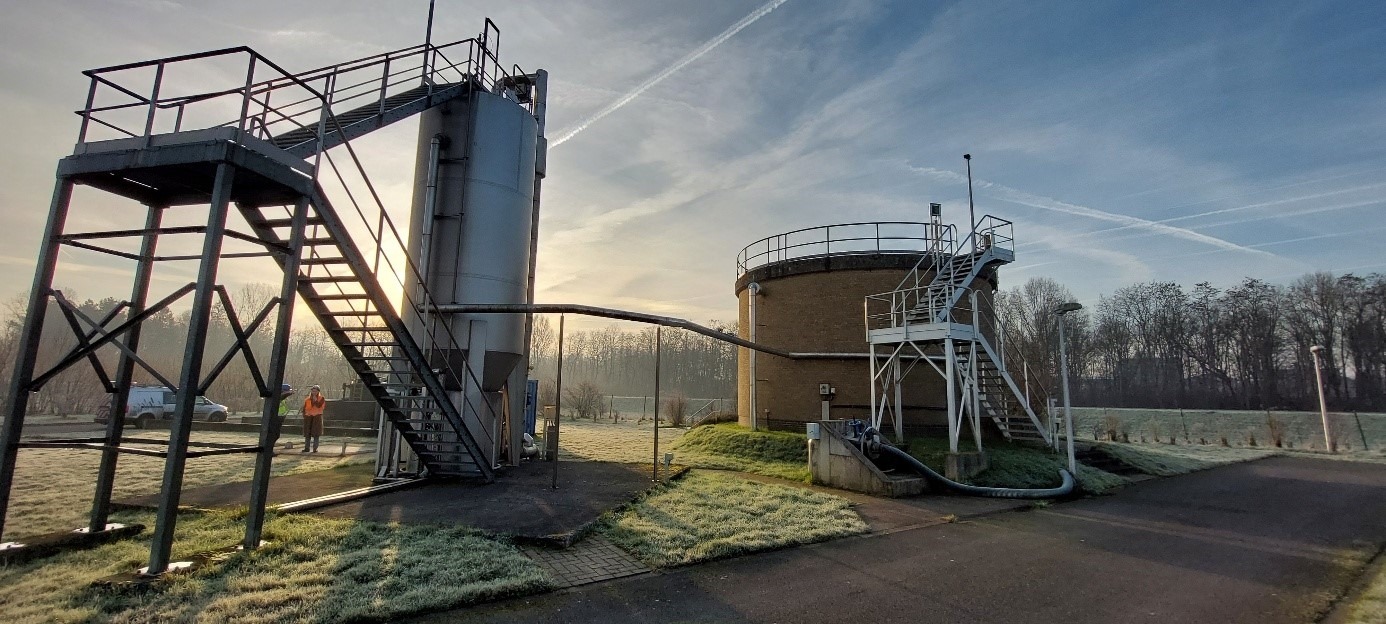
To comply with increasingly stringent European discharge limits (typically <3 mg/L TN and <0.15 mg/L TP), Aquafin is testing a full scale tertiary continuous filter at Grobbendonk wastewater treatment plant. Long term stable operating conditions were achieved with low N and P concentrations in the filtrate, meeting the required target levels, using one filter unit to simultaneously execute biological denitrification, physical-chemical phosphorus removal and removal of suspended solids.
Background and challenges
Main objective of the full scale test was to validate whether very low effluent concentrations dissolved inorganic phosphorus (DIP), below 0.05 mg/L and NOx-N below 0.5 mg/L, could be achieved. These low levels require a sophisticated and well balanced dosing strategy and a reliable monitoring and control system to maintain optimized filter process conditions. The challenge is to generate enough process data, testing various operating conditions to verify the technology and to determine generic design criteria for different plants and effluent conditions.
Approach
The test unit consists of a continuous sand filter with 5 m² surface area and 3 m bed depth. Feed flows varied between 40 and 70 m3/h. Within this single filter, chemical phosphorus precipitation and biological denitrification are integrated. Ferric chloride (FeCl₃) is dosed upstream of the filter, with the Me/o-P molar ratio as primary control parameter. At the same time, an applicable C-source is dosed to feed heterotrophic denitrifiers within the biologically active sand bed, in order to convert NOx-N into nitrogen gas. Both filter feed and filtrate quality are monitored inline with NOx-N and P analyzers.
Results
Phosphorus removal is directly related to Me/o-P dosage ratio. From a ratio of 2 onwards, a 90% consistent removal percentage was achieved, with o-P levels below 0.1 mg/L. Importantly, no deterioration in nitrate removal was observed at higher iron dosing levels.
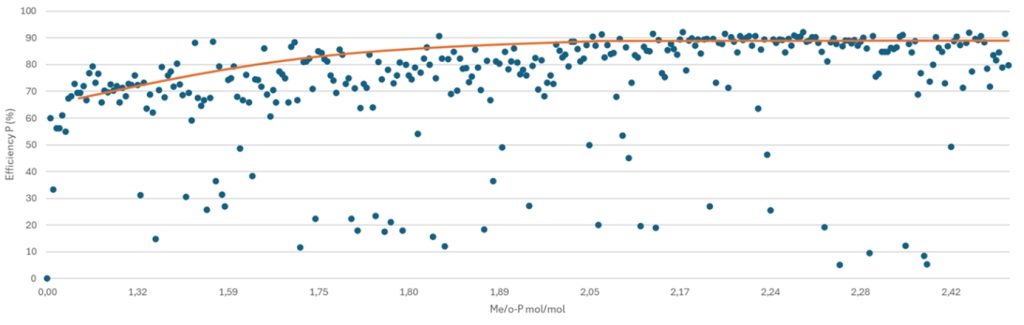
Denitrification performance remained stable throughout operation, with effluent NOx-N concentrations below 0.5 mg/L and specific volumetric denitrification rates between 0.5 and 1.5 kg N/(m³·d). A concern was whether aggressive phosphorus precipitation would inhibit biological denitrification. Full-scale data confirm that, under controlled dosing conditions, chemical precipitation and biofilm-based denitrification can coexist without measurable negative interaction.
Remote Sand-Cycle process monitoring and control proved to be very useful in the day-to-day operations and to detect any anomalies at short notice.
Conclusions
The full scale continuous filtration pilot at WwTW Grobbendonk demonstrates stable and reliable operations over a long period of time. Objectives for deep nitrogen and phosphorus removal within a single integrated process step were reached. Sand-Cycle technology for monitoring and controlling the filter system showed its value in day-to-day operations.
Learn more at www.sand-cycle.com